 Tala
Tala
Our story: when the system said no, a dad built his own answer
Tala is an AAC (augmentative and alternative communication) app that gives nonspeaking children a voice — built by a Swedish father after his autistic son was denied a communication device.
The scale of the problem: ~50 million people worldwide can't communicate without aids — and only ~2% of those diagnosed each year get help.
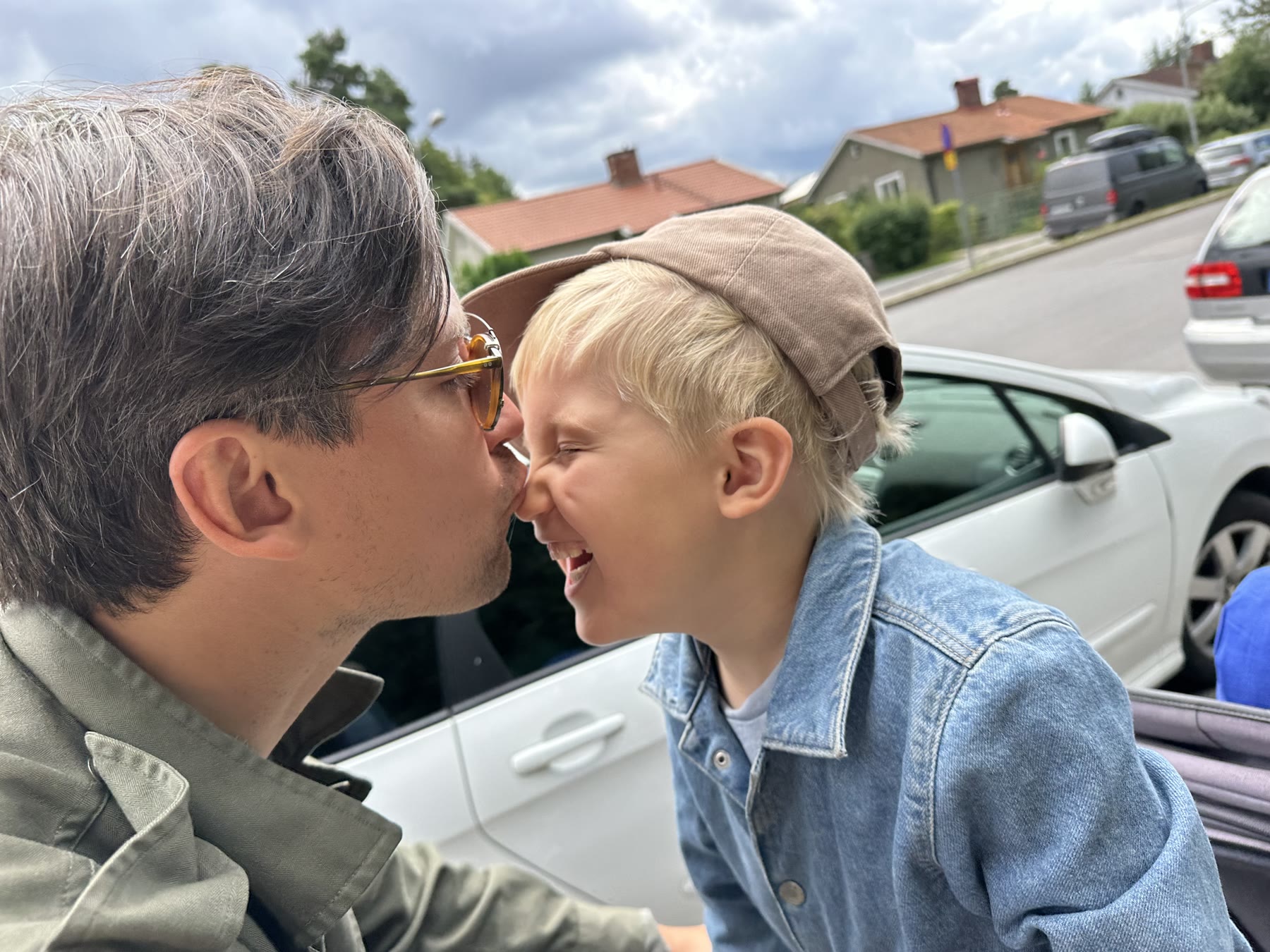
Mattias and his son Tom — the reason Tala exists. (Free to use with credit, high-res below.)
The story
Tom is autistic and nonspeaking. When his family sought an AAC communication device through the Swedish healthcare system, the professionals evaluating him said no. Their reasoning, as it was given to his parents: they didn't think he would use it.
Sit with that for a second. A nonspeaking child was denied a voice because experts predicted he wouldn't have anything to say.
Mattias, Tom's father, refused to accept it. Looking at the existing options, he found an industry stuck in the past: market leaders like Tobii Dynavox sell dedicated communication devices for $4,500–$6,000, roughly 90% of them paid for through insurance — which means a child's voice depends on gatekeepers, paperwork, and approval from the very kind of evaluation that had just rejected his son. Even the app alternatives cost hundreds of dollars and feel decades behind the consumer apps families use every day. Meanwhile, Tom — like so many autistic kids — used YouTube Kids completely intuitively. Nobody ever had to teach him. So Mattias asked a simple question: why isn't there a communication app that works the same way?
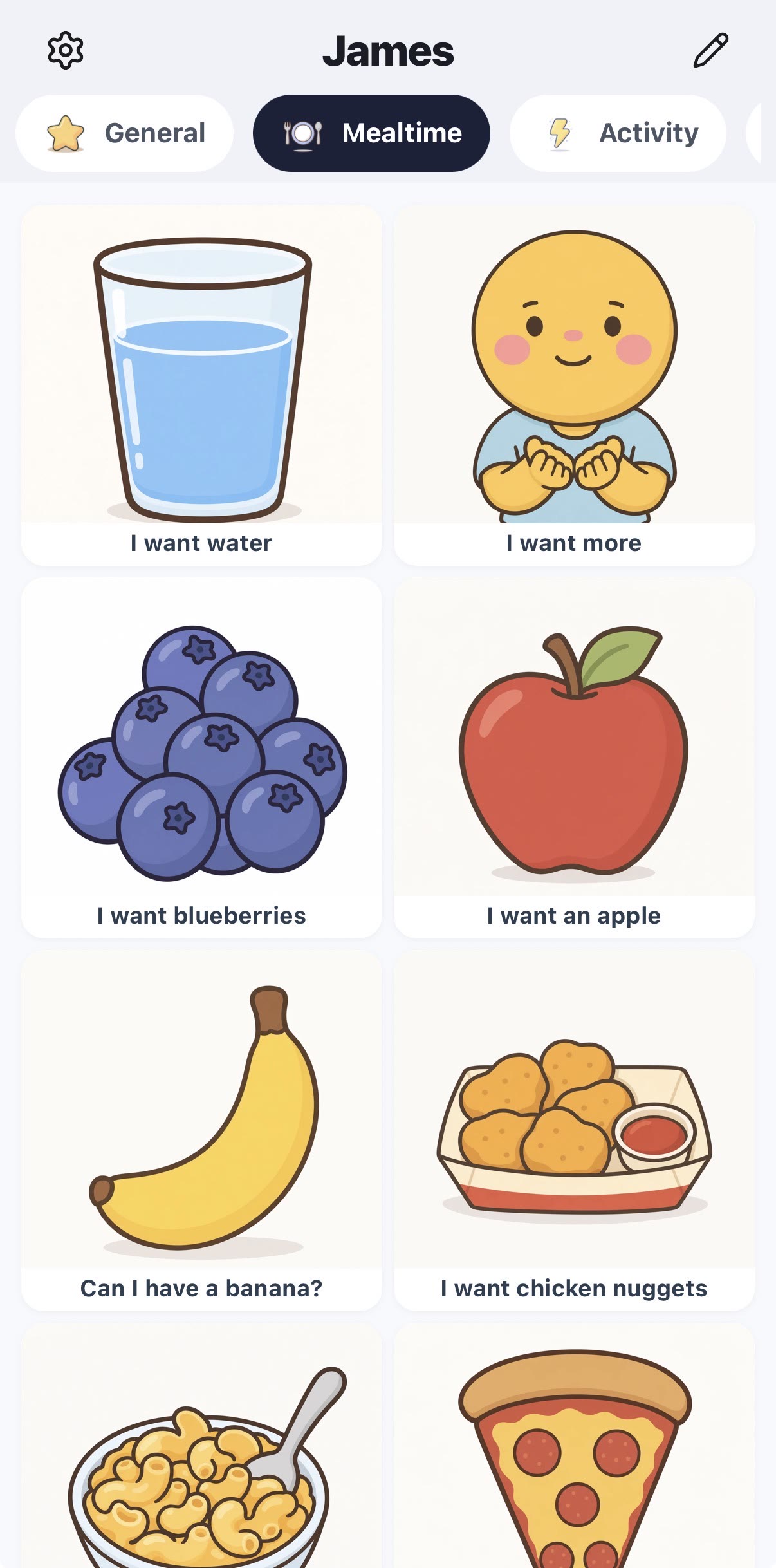
He built one. Tala works the way kids already understand: tap a picture, and it speaks a full sentence in a natural voice. Setup takes 90 seconds. There's no certification course, no clinic referral, no four-figure price tag.
Tom today
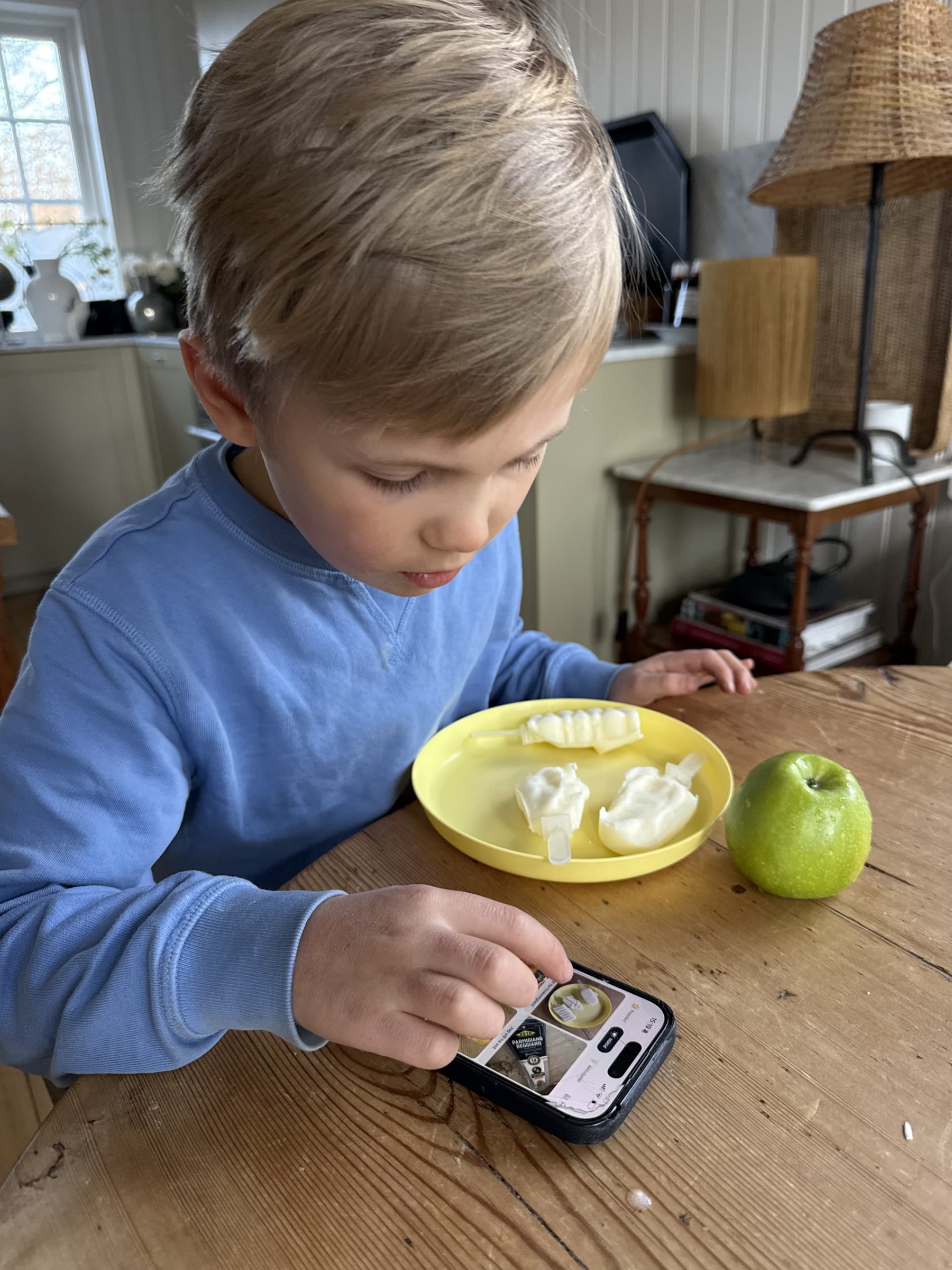
Tom at the kitchen table — asking for what he wants, on his own.
The boy the experts said wouldn't use a communication device now uses one every day. Tom tells his family what he wants, what he wants to do, what he wants to eat, what he wants to watch — no prompting, no training sessions, no specialist in the room. The prediction wasn't just wrong. It was wrong within minutes of him getting a tool built the way he already thinks.
"My son would have been left behind if we hadn't changed things ourselves. I'm on a mission to make sure no kid is left without a voice — whether they're in New Delhi or New York. Every nonspeaking kid in the world."
— Mattias, founder of Tala
The ambition is bigger than an app: to disrupt an industry where a child's voice costs $6,000 and requires insurance approval, and to make Tala the default the way Aspirin became the default — the name families reach for first, everywhere.
What parents say
"I have an 11-year-old son who is deaf, has severe autism, is nonverbal, and doesn't know sign language. We've spent years trying different AAC apps, both at home and at school, with very limited success.
The software is incredibly hard to use. The apps cost hundreds of dollars, they're difficult to configure, and the experience feels decades behind the consumer apps we use every day. I'm a technical person who's built consumer products. If I struggle to set up a communication app for my own child, I don't think that's a user problem. I think it's a product problem.
I downloaded Tala a few days ago. Within minutes, both my son and I were using it. Seeing him instinctively know what to do genuinely surprised me. Like many autistic kids, he's always known how to use YouTube Kids and Netflix. I'd never really stopped to consider that maybe the reason he'd struggled with AAC apps wasn't only because communication is hard for him. Maybe the software itself had been getting in the way.
For the first time in years, I feel like we have a tool that's designed for families instead of specialists. I'm already introducing Tala to my wife, my son's assistant, and his teachers so that everyone around him is using the same system.
More than anything else, Tala has given me hope."
— Aron, father of an 11-year-old Tala user
The market: a problem measured in millions
Those numbers come from the industry leader itself — Dynavox Group's own investor materials. Read them again: by the incumbent's own math, 98% of the people diagnosed as needing a voice each year don't get one. That is what a $4,500–$6,000, insurance-gated business model produces. Tala exists to serve the 98%.
Fast facts
- What it is: a picture-based AAC app for iOS and Android where every tap speaks a complete sentence in a natural voice.
- Who it's for: nonspeaking and minimally speaking children — autism, speech delay, apraxia — and their families, teachers and speech-language pathologists.
- Why it's different: as intuitive as YouTube Kids, set up in 90 seconds, no insurance approval — and a tiny fraction of the $4,500–$6,000 the leading AAC devices cost (or the hundreds of dollars established apps charge).
- Founded: 2025, Sweden. Founder-built and family-run.
Photos & assets
Free to use in coverage of Tala, credit "Tala AAC / talaaac.com".


Quotable
"Every kid deserves a voice — not a $6,000 device behind an insurance approval."
"No one had to teach my son YouTube Kids. Why should a communication app be harder than that?"
"The system decided my son couldn't communicate. He now says hundreds of things a week."
Mattias, founder — mattias@talaaac.com
Happy to do interviews (English or Swedish), share verified usage data, or connect journalists directly with families, teachers and speech-language pathologists using Tala.